Locally owned · Serving Denver & the Front Range
Written scope before work begins
Photo documentation at every step
Once the standing water is gone, the real work starts. Water trapped in drywall, baseboards, subfloor, and framing doesn't evaporate on its own — it wicks, it warps, and it feeds mold. We set up drying equipment, record moisture readings at monitoring visits, and keep going until the numbers say the structure is dry.
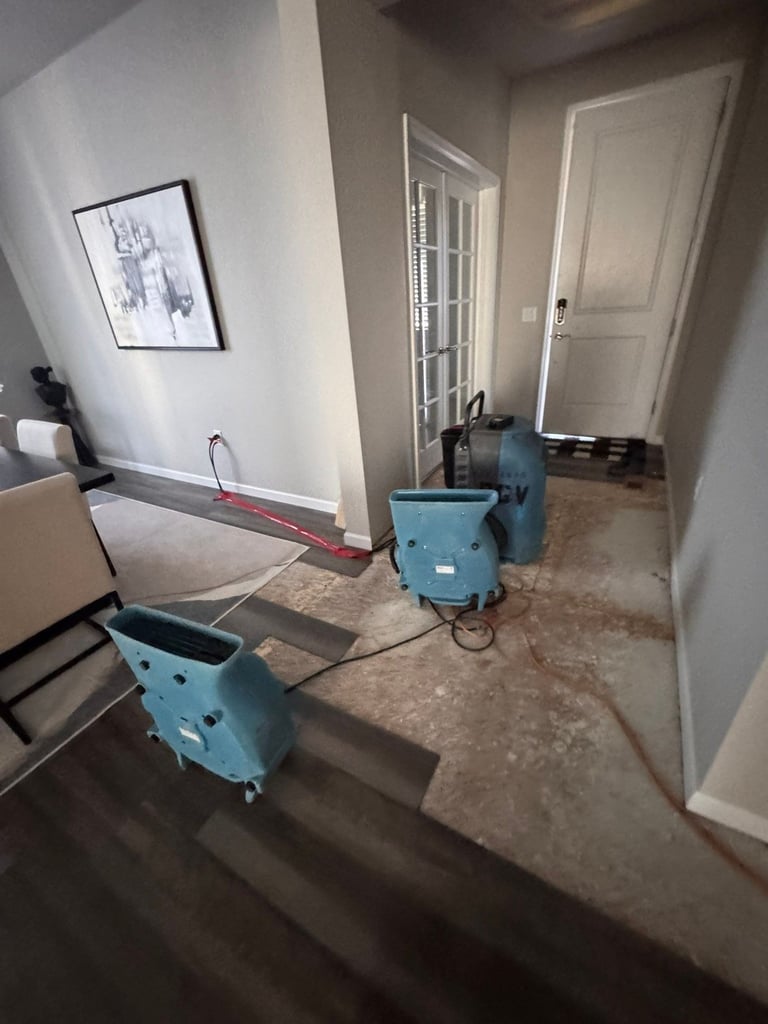
Air movers and dehumidifiers running in a room with the affected flooring removed — set, monitored, and adjusted as the readings change.
What this service is
Structural drying is the controlled removal of moisture from building materials — not the same thing as pointing a fan at a wet floor. Materials like drywall, OSB, engineered flooring, and dimensional lumber hold water for a long time, and each one releases it at a different rate.
The job is to move enough dry air across wet surfaces and pull enough humidity out of the air, in the right place, for as long as the materials actually need. That's why we meter instead of guessing.
Honest on timing
We don't promise a fixed number of days for every job. Drying time depends on the material, the depth of saturation, the building's construction, and the indoor conditions. The moisture readings tell us when to stop — a calendar can't.
Map the moisture first. Meters and infrared imaging show where the water went — behind baseboards, under flooring, inside wall cavities — before we place a single piece of equipment.
Size the equipment to the job. Air movers, dehumidifiers, and where needed specialty drying setups for cavities and hard-to-reach assemblies.
Record readings at monitoring visits. Moisture readings are logged at each monitoring visit. If a wall isn't drying, we change the approach rather than leaving it to run.
Verify dry, then remove equipment. Equipment comes out when readings are within normal range for the material — documented, not assumed.
Saturated drywall, swollen trim, and contaminated porous materials won't dry back to usable condition. In those cases we remove the damaged material, dry the structure behind it, and rebuild — which is the structural repair side of the job.
Signs moisture is still there
These are the things people notice days or weeks after they've already mopped up and moved the furniture back.
The most reliable early signal. Odor shows up before visible growth and usually means damp material somewhere you can't see.
Hardwood edges curl, laminate seams lift, and tile gets hollow-sounding when the subfloor beneath is still wet.
Moisture pushing out through a painted wall shows up as blistering, flaking, or a chalky haze right above the baseboard line.
Water on the inside of windows or cold pipes in one room — not the whole house — points to elevated humidity in that area.
Drywall tape separating, new cracks above door frames, or a water ring that keeps darkening is a moisture indicator, not cosmetic wear.
A wall that feels cooler than the ones beside it often has saturated insulation behind it. Press gently — soft drywall means it's gone.
Not sure what you're looking at? Send a photo through our contact form or call and describe it. We'll tell you whether it needs a moisture assessment.
(303) 416-5841Our drying process
Six phases with a measurement between each one. Most homes see equipment a few days; badly saturated assemblies take longer.
Before equipment goes down, we establish a baseline: pin and pinless meter readings on every affected material, thermal scans where needed, relative humidity and temperature, and a written sketch of what's wet. This baseline is what makes the whole job verifiable.
Plastic sheeting keeps dust and spores from migrating into clean rooms and contains the drying chamber so the equipment can work efficiently. Furniture and belongings are moved or covered, and floors get protection where equipment sits.
Air movers are angled to sweep moisture off wet surfaces, and dehumidifiers are positioned to pull that moisture out of the air. The number and type of units comes from the size of the affected area and how much water the materials are holding — not a fixed package.
Each visit we re-read the same points, log moisture content and humidity, and photo-document. If a reading plateaus, we change airflow or add equipment. This is the part that separates a real dry-out from running fans for three days and hoping.
Drying is complete when affected materials read within a normal range compared to unaffected reference areas, and ambient humidity is back to a normal indoor level. Then — and only then — equipment comes out.
You receive the drying record: readings, photos, equipment hours, and notes. If material had to be removed, we outline the repair scope so you know exactly what remains.
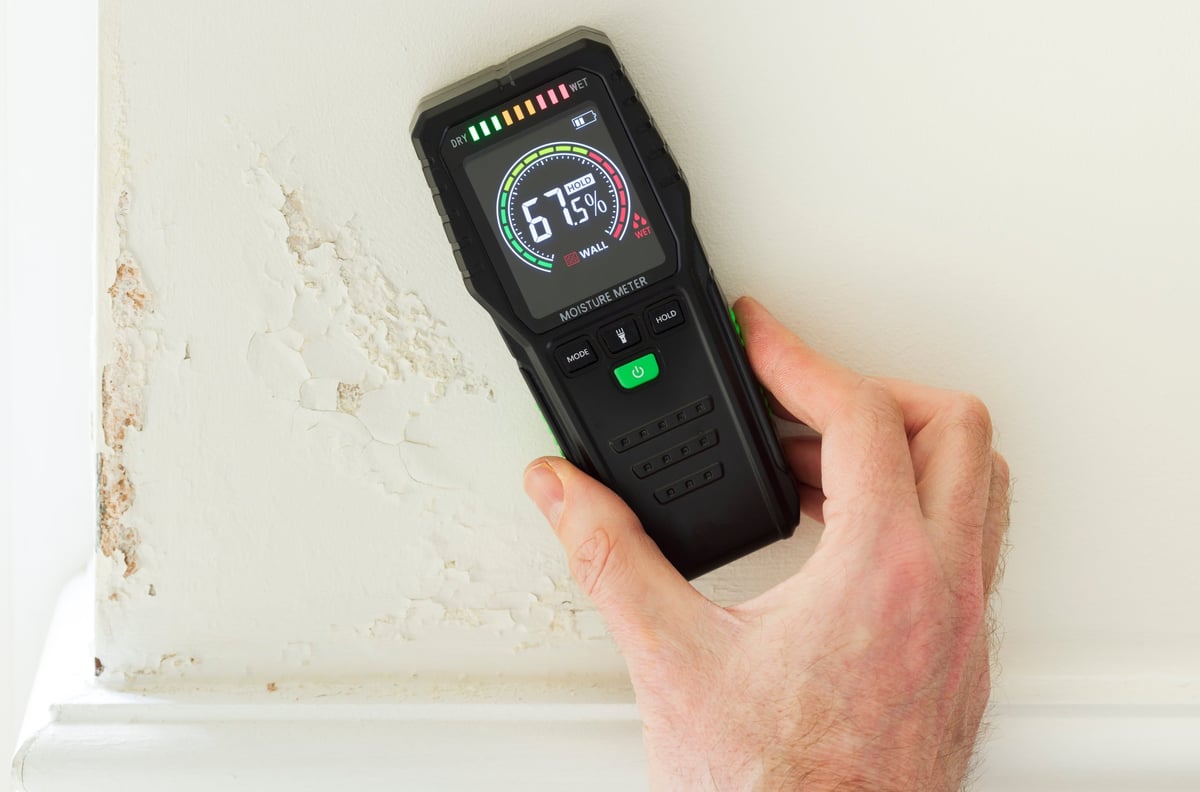
The reading is the record
Same points, same meter, every visit — so progress is something you can see rather than something we tell you.
Daily
Logged readings
Equipment & documentation
Commercial drying equipment moves a lot of air and pulls a lot of water out of it. Here's what typically goes to work — and the record we leave behind.
Air movers
High-velocity blowers that break the boundary layer of moisture on wet surfaces and accelerate evaporation.
Dehumidifiers
Remove evaporated moisture from the air so wet materials keep releasing water instead of stalling in humid air.
Moisture meters
Pin and pinless meters measure moisture content in drywall, wood, and flooring to quantify what's wet.
Thermo-hygrometers
Track temperature and relative humidity in the drying chamber to confirm conditions favor evaporation.
What's in your documentation
Specific equipment brands and models vary by job and availability. Ask your technician what's being placed and why.
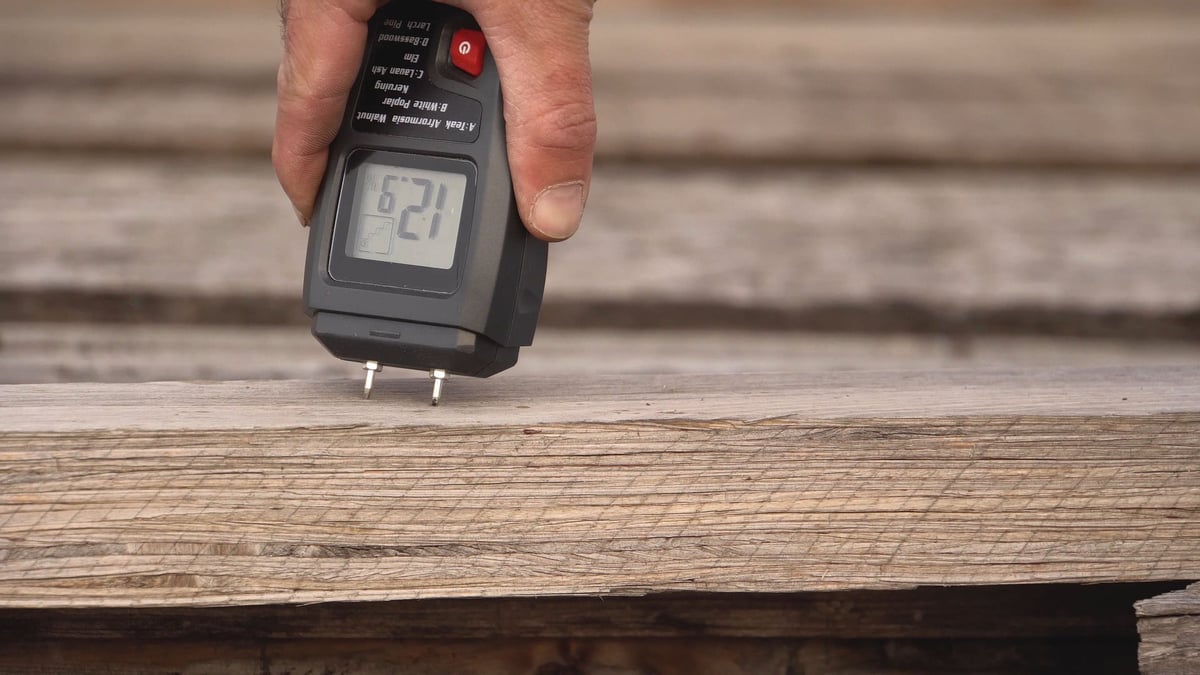
The decision point
Equipment stays in place until the readings meet dry standard — not until a set number of days has passed.
Daily
Monitoring
Job Walkthrough
On a residential water leak, the drying phase is where a job is either finished properly or quietly left half-done. What the homeowner described:
Why homeowners choose RGV
Drying is the least visible part of a water loss, which makes it the easiest part to fake. We'd rather show you the numbers.
(303) 416-5841Denver-based. The number you call reaches the people doing the work, not a dispatch queue in another state.
You hear what today's readings were and what's planned next — by call or text.
Photos and moisture logs are yours, and they're formatted to be useful in an insurance claim.
Contents moved and protected before equipment goes down, floors guarded, and the site cleaned before we leave.
Scope and price in writing before work begins. If drying takes longer than expected, we talk to you first.
Available on our services — mention it when you call and we'll walk through current terms.
Related services
The full mitigation sequence — extraction, drying, documentation, and applicable repairs.
ViewStanding water removed by pump and extractor — the step that comes before drying.
ViewWhen drying started too late, containment and removal address what grew.
ViewDrywall, flooring, and trim rebuilt after the structure is verified dry.
ViewDrying questions
If your question isn't here, call and ask. We'd rather explain the process than have you guessing while your floors are wet.
(303) 416-5841It varies. A carpet-and-pad loss in one room is a very different dry-out than a saturated subfloor with wet wall cavities. Rather than quote a fixed number of days, we give you an initial estimate based on the first set of readings and update it as the numbers change. Equipment stays until the materials verify dry.
Often yes, in unaffected areas. Air movers are loud and run continuously, so sleeping near the equipment is difficult, and containment may block off part of the home. If the loss involves contaminated water or extensive demolition, we'll tell you plainly that staying isn't the right call.
Household fans move air but don't remove moisture from it — in a closed room you're mostly recirculating humid air. In Colorado, opening windows in winter can also drop interior temperatures enough to slow evaporation and risk frozen pipes. Professional drying pairs high airflow with dehumidification so moisture actually leaves the building.
Some materials can't be saved once they're saturated — typically drywall below the water line, swollen baseboard, and laminate flooring. We remove only what's necessary to let the structure dry, document the removal with photos and measurements, and then quote the repair scope separately so drying and reconstruction stay clearly distinct.
Drying equipment does draw power, and it's normally accounted for in the job scope. We're careful about circuit load and will tell you upfront if a setup needs to be spread across circuits. If you have concerns about your panel or an outlet, say so before we place equipment.
A plateau usually means one of three things: an ongoing water source we haven't found, a hidden cavity the air isn't reaching, or a material that can't be dried in place. We investigate rather than adding equipment blindly — and we'll explain what we found and what it changes about the plan.
Open 24/7 — including holidays
Materials left damp keep wicking water upward and outward. Call and we'll tell you what the situation needs — even if the answer is a single inspection.
Locally Owned • Serving Denver & Surrounding Areas