Locally owned · Serving Denver & the Front Range
Written scope before work begins
Photo documentation at every step
A flooded basement after a Front Range storm, a snowmelt week, or a failed sump pump is a different loss than a burst pipe. The water usually carries soil and debris, it usually reaches more of the floor, and the source often isn't fixed yet.
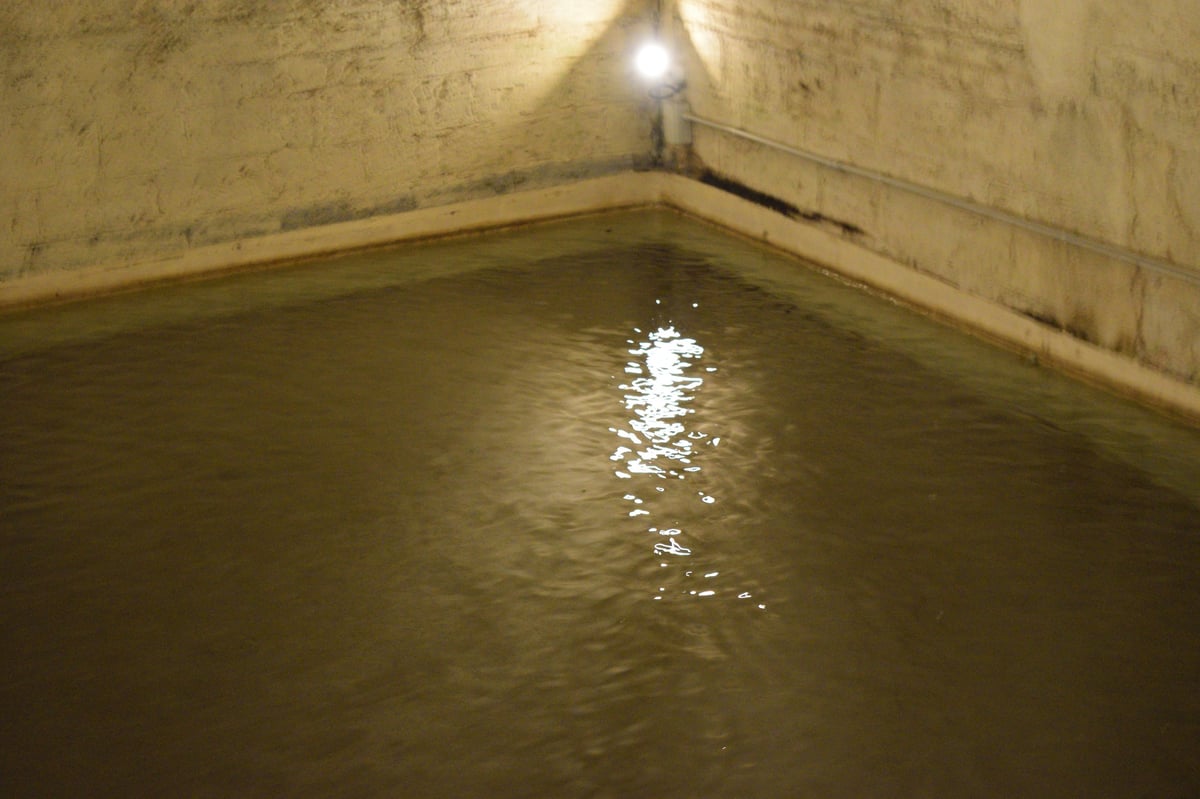
Flooded basements hold water in the slab, the walls, and whatever was stored on the floor.
What This Service Is
A supply line failure dumps a known volume of clean water in a known spot. Basement flooding is usually messier — soil-laden water pushing through a cove joint, a failed sump during a downpour, or a window well that filled faster than it drained.
That matters for two reasons. First, the water may be contaminated enough to change how it's handled. Second, the source often isn't under our control — we can remove and dry the water, but a wet basement will flood again unless the drainage problem gets fixed.
We'll be straight with you about which part is ours and which part needs a waterproofing or drainage contractor.
Summer storm runoff and flash flooding
Intense Front Range storms overwhelm gutters, downspouts, and grading faster than soil can absorb.
Spring snowmelt
Rapid melt against a still-frozen ground line pushes water along foundations rather than into it.
Sump pump failure or power loss
The worst pump failure happens during the storm that cuts your power — the same hour it's needed.
Window wells filling and overflowing
A clogged well drain turns a window into the entry point, sending water straight down a finished wall.
Cove joint seepage
The seam where slab meets wall is a common path for hydrostatic pressure to push water through.
Failed or missing downspout discharge
Downspouts dumping next to the foundation put roof water exactly where you don't want it.
Drying out vs. keeping it dry
We handle the drying. Preventing the next flood is a drainage and waterproofing scope — grading, downspout extensions, sump upgrades, or interior drainage. Ask us what we saw while we were down there; we'll tell you honestly what we'd fix first.
Signs & Emergencies
Basements hide water better than any room in the house. Finished walls, dropped ceilings, and storage give water thousands of places to sit unobserved.
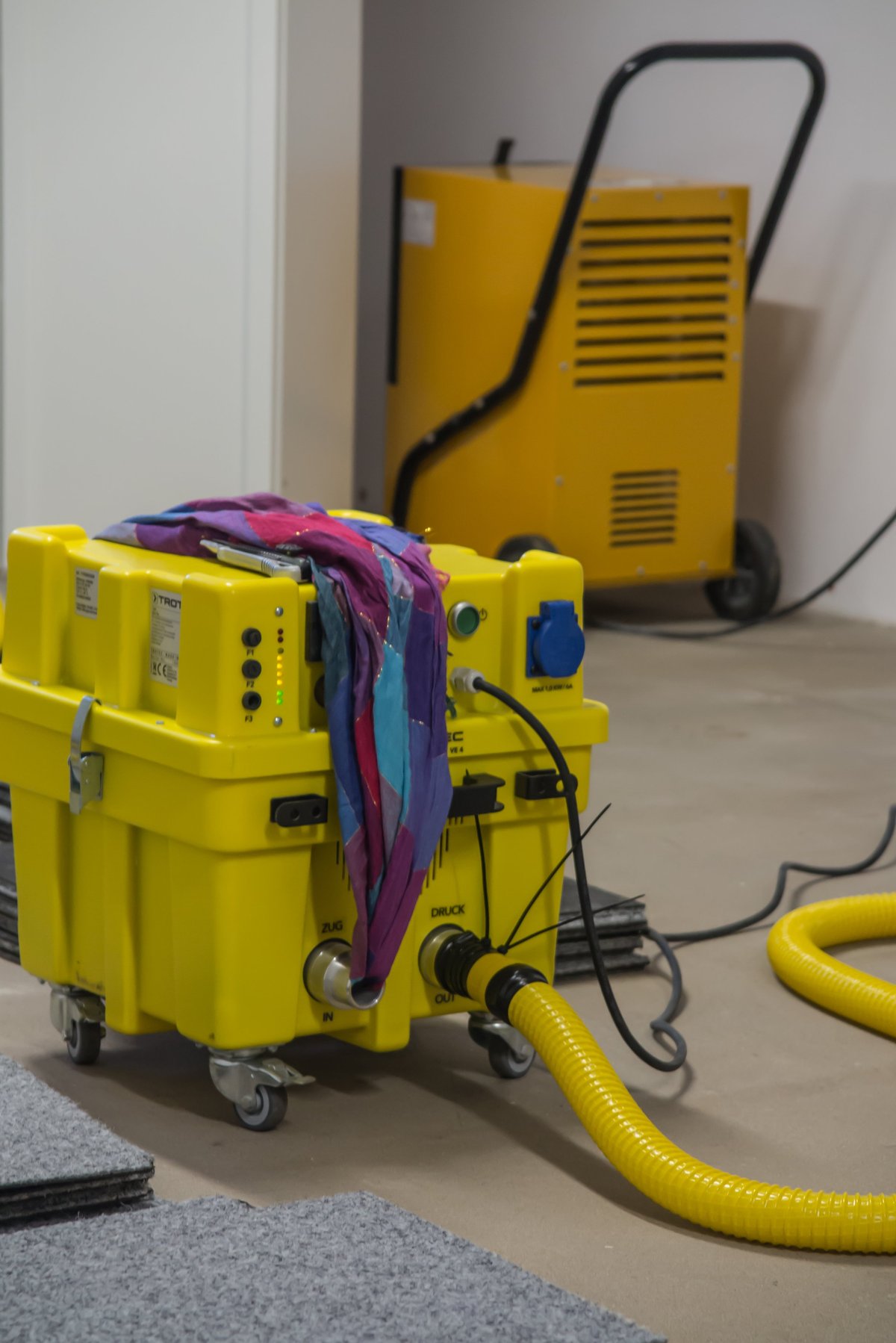
Visible standing water
Obvious, and the easiest call. Depth and square footage determine what equipment gets sent.
Damp carpet or a squishy floor
Water wicked into pad and carpet from an edge you can't see. Often the first clue.
A musty smell that's new
Persistent mustiness usually means moisture is present somewhere — even if nothing looks wet.
White chalky lines on the wall
Efflorescence is mineral deposit left by water moving through concrete — a sign of seepage.
Water marks under windows
Staining at a window well means it filled and overflowed into the wall below.
Cupped flooring seams
Laminate and engineered wood lift at the seams when the subfloor below is holding water.
If your electrical panel or outlets are in the wet area
Don't enter the basement. Stay out, keep others out, and call us — we'll tell you what to do about the power before anyone goes down there.
Our Process
More moving parts than a single-room water loss: contents, a slab that holds moisture, and often a source that isn't fully resolved.
If a sump has failed or a drain is backed up, we'll discuss options on the phone. If it's groundwater, there may be nothing to shut off — we work with what's coming in.
Boxes, furniture, and anything on the floor get lifted or moved out before extraction — items sitting in water soak up the loss and complicate drying.
Deep water comes out with pumps, then extraction tools handle what's left on the slab and in carpet. Mud and silt get removed rather than pushed around.
Meters and thermal imaging check finished walls, ceiling cavities, and the slab. Flooded basements hide moisture behind drywall that looks perfectly fine from the couch.
Wet pad, ruined carpet, saturated drywall at the base of walls, and debris come out. Then air movers and dehumidifiers run until the slab and framing read dry.
Affected surfaces cleaned and, where needed, disinfected. You get photos, readings, and an honest note on what caused it and what to fix to avoid a repeat.
Equipment & Documentation
Concrete holds moisture differently than wood. A basement that looks dry to the touch can still be releasing vapor into the air for days, which is why slab readings and humidity control matter as much as surface extraction.
Submersible pumps
For water deeper than a wand can handle — typical after a storm or sump failure.
Extraction and wet-vac units
For remaining water on the slab, in carpet, and around the base of walls.
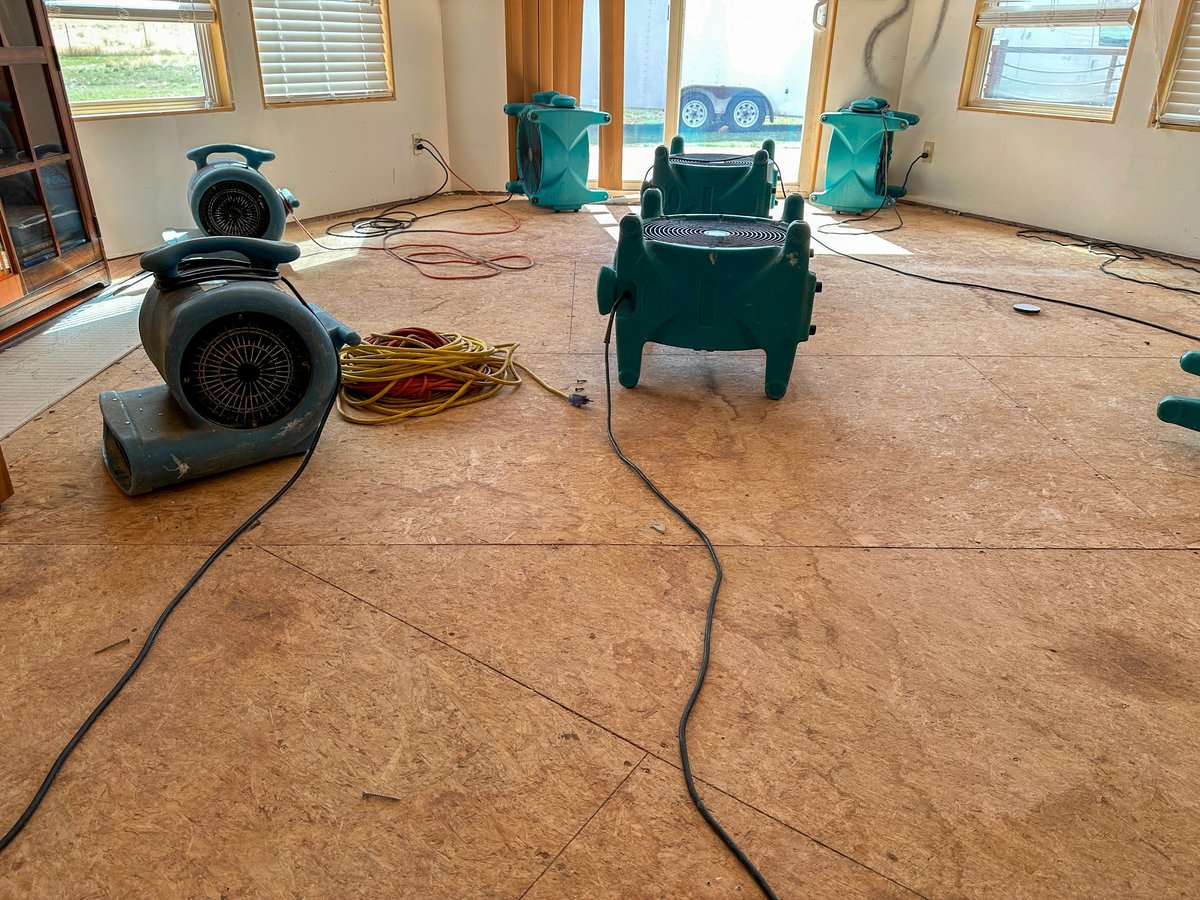
Air movers
Positioned to move air along walls and across the floor rather than straight up.
Dehumidifiers
Basements are humid even when dry — pulling vapor out is what finishes the job.
Moisture meters and thermal imaging
Find moisture behind finished walls and in ceiling cavities over the basement.
Contents handling
Items lifted, moved, and where possible dried rather than written off.
What goes in your file
Photos before and during extraction, slab and wall moisture readings, a list of materials removed, and an itemized scope. Basement flooding is frequently a claim — the record is what makes it a clean one.
Why Homeowners Choose RGV
Photo albums, tools, the kid's old furniture. Flooded basements are full of things that don't show up on an inventory list. We treat the contents accordingly.
(303) 416-5841Denver-based, storm-ready
After a Front Range storm, call volume spikes. Being local means fewer jobs already queued ahead of you.
Straight talk about the cause
We'll tell you when the fix isn't ours to make, and what we'd address first.
Hidden moisture found
Thermal imaging and meters check the walls nobody thought to open.
Contents not bulldozed
Lifted, sorted, and saved where possible rather than thrown out with debris.
Reasonable, explained pricing
Scope and cost in writing before equipment gets set.
Senior & veteran discounts
Available on our services — mention it when you call.
Basement Questions
For general company questions, see our full FAQ.
(303) 416-5841Getting the pump running stops more water from coming in — it doesn't remove what's already there. The water sitting in your carpet, pad, and the bottom of finished walls won't evaporate on its own; it will move into the framing and become a mold problem. It's worth a call to assess even if the pump is now working.
Water that enters from outside — surface flooding, rising groundwater — is generally excluded from standard homeowners policies and requires separate flood coverage. Water from inside, like a failed pipe or sump overflow, is often treated differently. This is a common point of confusion, so check your policy and call your agent before assuming either way. We document the loss the same regardless.
Usually, yes — with some caveats. Evidence like efflorescence along the cove joint, water lines with silt, or moisture tracking down from a window well points to exterior intrusion. Clean water pooling under a specific fixture points elsewhere. Sometimes the water was already pumped out before anyone looked, which makes the cause harder to establish. We'll tell you what we can determine and what we can't.
Our scope is cleanup and drying, not waterproofing or drainage installation. Grading, downspout extensions, sump system upgrades, and interior drainage are separate scopes handled by waterproofing specialists. We'll point out what we observed while we were in the space so you know what to ask a specialist about.
It gets lifted and moved out of the wet area before extraction. Wet cardboard boxes generally don't survive, but the contents often do if they come out early. Furniture, tools, and hard goods are assessed individually — some need drying, some just need air. We'll photograph items we can't save rather than quietly removing them.
24/7 Basement Water Response
Removing the water is the urgent part; drying the slab and walls is what prevents the second problem. Call and tell us what you're seeing — and mention if the water is near your electrical panel.
Locally Owned • Serving Denver & Surrounding Areas